


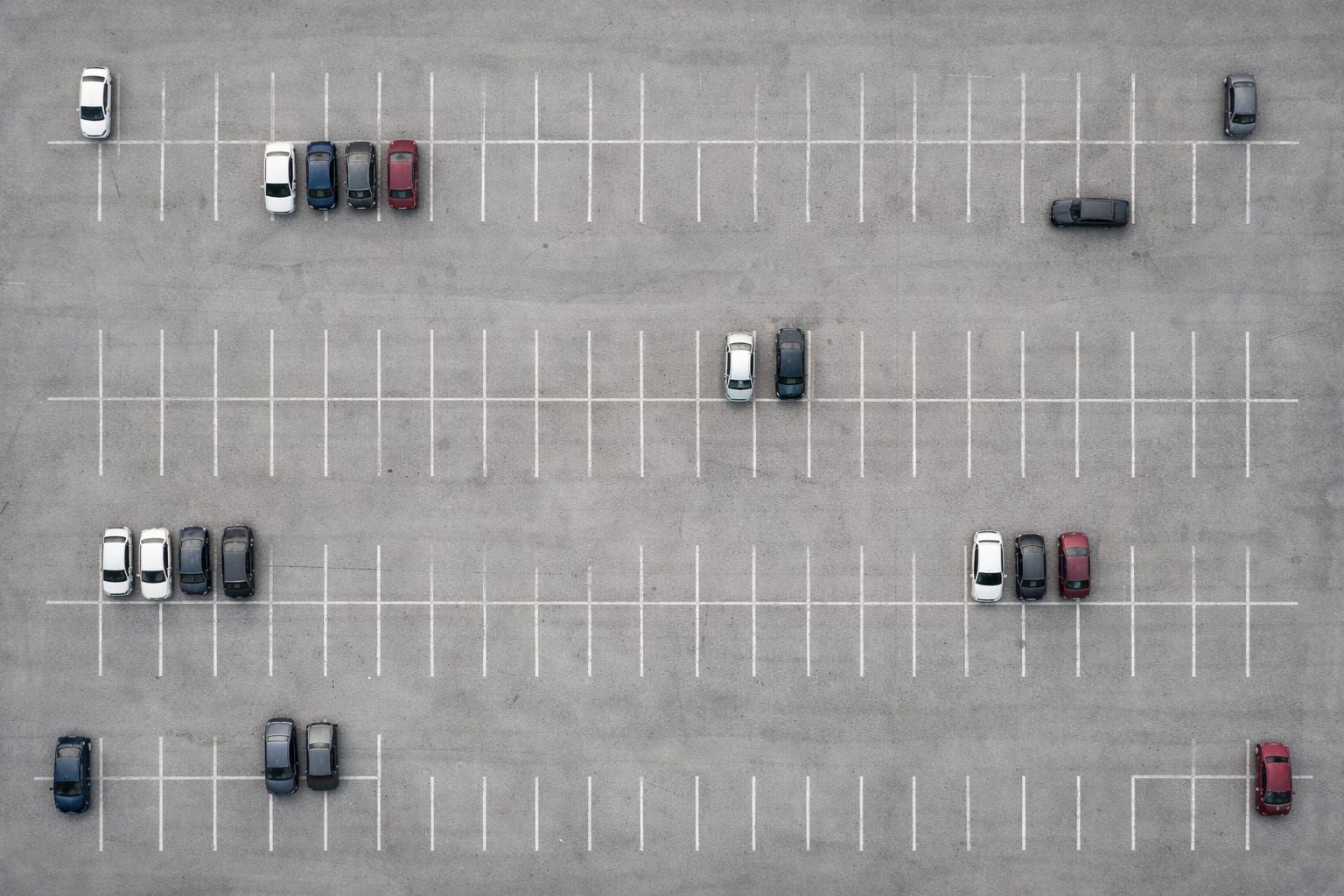
Several years ago I wrote a short piece called “Standing in a Chalk Circle…at 400 feet”. At the time, I thought I was describing an operational insight.
I reread that piece recently and now I understand it differently. Differently, because I experience it in a most different way today. What I thought, at the time. was a story about improving a trailer yard was also a story about how I think.
The yard in question bothered me from the first moment I saw it. Hundreds of trailers, frenetic movement in every direction, tight corners. And trailers were filling the rows between the neat aisles. I felt it in my gut.
The first time I walked into that facility, I matter-of-factly mentioned that the yard must be a problem. It was a pattern I recognized without fully understanding why. When the yard ran at or over capacity, dwell rose. Others saw it too. But the yard was too complex and there were easier problems to solve, so attention went there first. That made sense.
But one metric kept pulling me back upstream: Stem time.
Stem time begins when a yard move is assigned to a hostler, and it ends once the trailer is physically in the door. It varied by trailer and door at this massive site, but it was consistently higher here than at comparable facilities. Not occasionally high. Consistently high. And worse, stem time was hiding a part of the site’s biggest metric: Gate to close dwell time. That is the number the customer paid attention to.
The equipment was the same as other sites. The control systems were solid. Site leadership was disciplined. This was not people being slow. It was systemic slowness that people acknowledged but didn’t understand.
Before I ever bought the drone, I opened Google Earth. From the satellite view, I could see rows of trailers packed tightly, stacked deep. Units clearly buried behind others. The yard was saturated.
There was a quiet certainty in that moment. I had seen enough systems to know this pattern mattered. When you observe flow long enough, you learn to distinguish noise from structure. This wasn’t noise.
If I wanted to understand how three hundred inbound trucks a day actually moved through that site, I had to understand what was happening in the yard. That wasn’t optional. It was foundational.
Google Earth showed congestion. It didn’t show sequence. It didn’t show how many moves it took to retrieve a trailer or how arrival variability fed burial. For that, I needed motion.
I tried to understand it from the ground first. I walked it with a clipboard and stopwatch. Every yard horse looked the same. Trailer numbers blurred together at distance. I couldn’t see the far side of the building. I was watching pieces and trying to infer the whole.
I could feel the pattern, but I couldn’t demonstrate it.
When I work on problems, I look for similar solutions in other contexts. I didn’t need a helicopter. I needed something that functioned like one. Drones were just becoming usable at the time. The one I bought was large and heavy by today’s standards. It could stay in the air for about twenty-eight minutes and return automatically to its takeoff point using GPS.
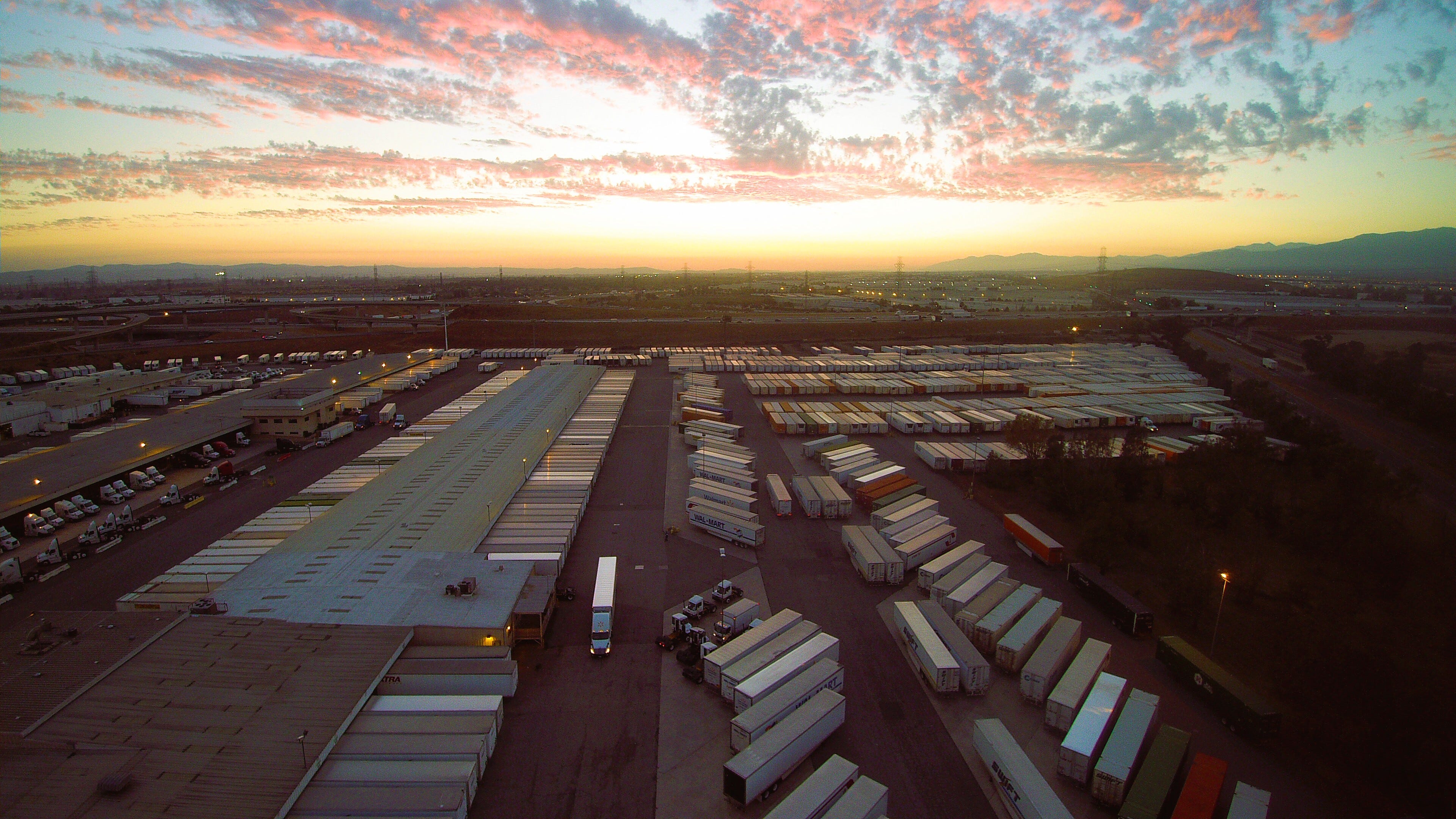
The first day I flew it, the hostlers saw it go up. By mid-afternoon I got a call saying it was the best day the yard had ever had. Productivity was up. Everything was moving. That told me I wasn’t looking at the system. I was looking at its participants typical response to being observed.
So I adjusted. I launched from a distance and kept the flights less visible. I varied the timing. The yard returned to its usual rhythm. The extra repositioning moves were there again.
What I kept seeing was simple. To get one trailer to a door, several others had to be moved first. Not because anyone was careless. Because the yard was too full and sequencing broke down. From the ground it looked like constant motion. From above it was a chain reaction.
Trailers arrived in uneven bursts. Space tightened. The right trailer got buried. Drivers moved multiple inbound loads just to retrieve the right one. The cost wasn’t obvious in a single place. It was distributed across dozens of small, repeated moves.
When I could finally see that sequence clearly, the system made sense. The irregular arrivals, the crowded yard, the extra repositioning, the dwell time. It connected. That is when a physical shift locked in. The restlessness I had been carrying dropped. I wasn’t guessing anymore.
The first thing that happened was clarity. Once I could see the system without guessing, the rest followed. We quantified the hidden cost. We built a surcharge model tied to dwell. We explained it to the client. None of that felt complicated after the pattern was legible.
Years later, I recognized that same quiet certainty in myself.
There were situations where something in me signaled that I was too close to the pressure to see clearly. I didn’t name it at the time. I worked harder. Looking back, the signal wasn’t anxiety. It was pattern recognition.
When I ignore it, I narrow. When I respect it, I widen.
In the yard, following that signal led to altitude and clear seeing. In my own life, following it led to distance from the pressure behind unsolvable and misunderstood problems. In both cases, the work improved.
I didn’t learn to think differently. I learned to trust how I think. When I can see flow, I follow it. When I can’t see enough, I change vantage instead of forcing a conclusion. The drone was a tool. The pattern recognition was already there.
The drone exposed more than $1 million in wasted labor and the critical minutes that were quietly murdering Gate-to-Close. But the deeper lesson was this: the system wasn’t mysterious. We were just too close to it. From the wrong vantage point, you mistake motion for progress and noise for explanation. Clear seeing is not a personality trait. It’s a practice. It’s refusing to guess, refusing to blame, and refusing to stop looking until the pattern is unearthed for all to see.
-30-
Reader’s Note
This began as an operational case study that grew into a lesson in diagnostic discipline. When performance lags and the obvious explanations fail, the problem often is not effort or personnel. It’s perspective. Most systems don’t hide their constraints. We simply examine them from the wrong perspective. Until the pattern is visible, analysis is guesswork.
The drone didn’t solve the problem. It made the system legible. Clear seeing is not intuition. It’s a method to align flow.
— Todd Andrew Owings