


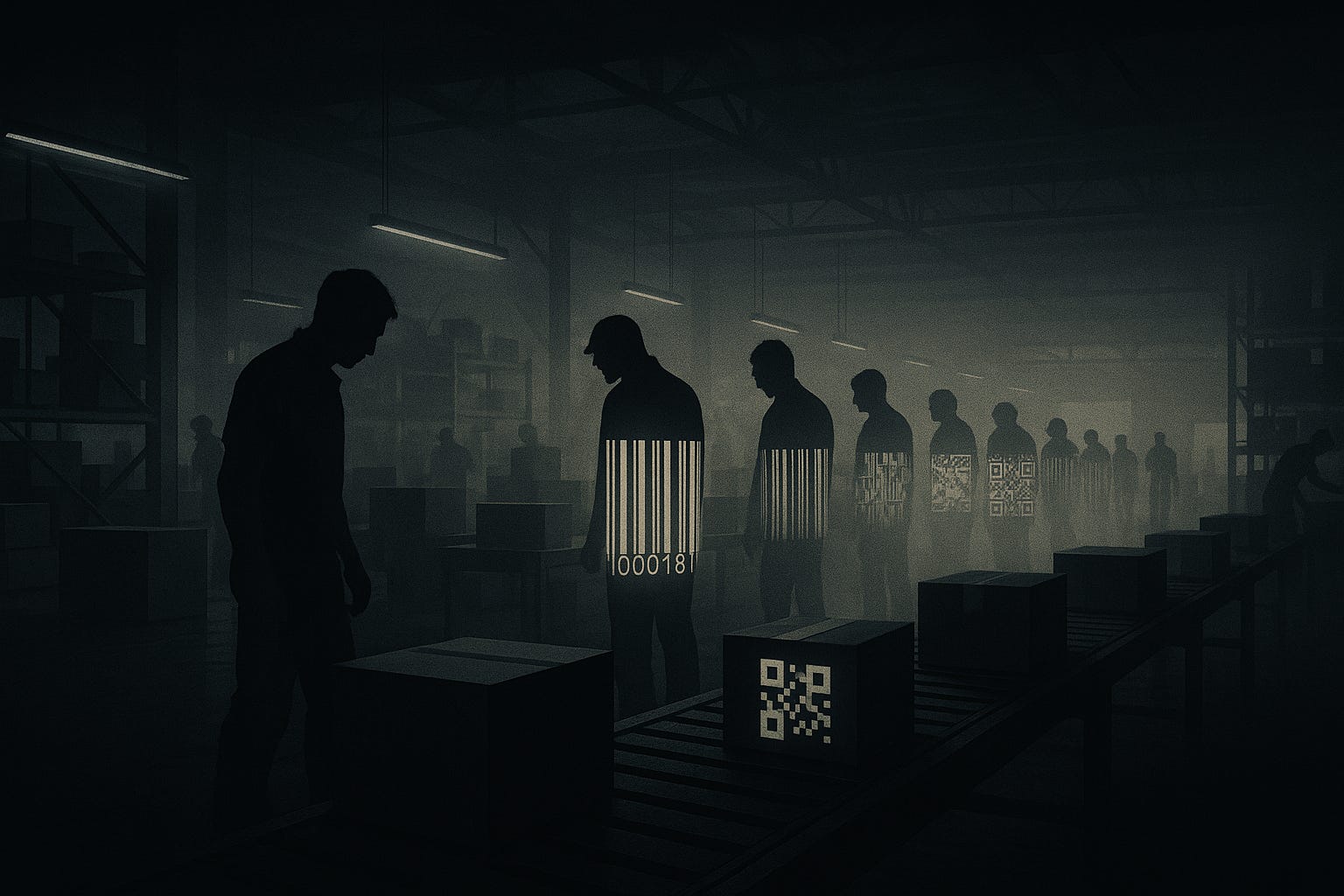
Lean wasn’t supposed to be a control system.
It’s supposed to be a human system.
It started with a purpose. Focus where the work is done and reduce waste, grow the people, and solve real problems. That was the soul of the Toyota Production System (TPS), evolving with the people, committed to fostering good change, grounded in respect. Lean was intended to carry that approach forward. Yet, somewhere between the stretch goals, operational dashboards and tightening budget targets, we lost the very soul of Lean.
What’s left in most places is just the toolbox of 5S, value stream maps, and standard work, among others. These were meant as part of a greater improvement philosophy built around the support of people, not control. Yet, stripped away from their roots, theses tools don’t truly guide improvement. They punish. And that’s where we are now.
But first, let me show you what good looked like.
A Story That Still Gets It Right
UPS built a process improvement team. One of their famous insights? Left-hand turns waste a lot of fuel, slow down all deliveries, and often are a factor in accidents. So the team developed a methodology to eliminate most left turns. The results were staggering:
10 million gallons of fuel saved
20,000 tons of CO₂ emissions cut
350,000 more deliveries a year
But here’s what matters: it made the drivers’ jobs easier and safer. Their workday became smarter and smoother. That’s actual Lean—improving efficiency by making work better for those doing the actual work. It even led to better serving the customer. Lean with its soul deeply intact.
“This was not just a sustainability initiative,” said UPS Senior Director of Sustainability Patrick Browne. “This was an operational efficiency improvement that also helped employees and customers.”2
Then There’s Amazon
Where the UPS Left-Turn story illustrates how Lean methods save money, increase throughput and support workers, Amazon has scaled Lean tools and paired them with advanced analytics. The result is a labor control system used to monitor and punish front-line employees if they fail to meet engineered standards.
Workers are tracked by algorithmic surveillance—“Time Off Task” scores, scan rates, pause metrics. Deviate too far, and the system fires you automatically. Warehouse employees skip water to avoid bathroom breaks. Injury rates skyrocket. People burn out. Thirty percent quit in 90 days.3
It’s not just Frederick Taylor with a stopwatch anymore. Today, it’s as if Taylor were armed with machine learning; real-time, swarm surveillance; and algorithmic control. The same Taylor who once timed individual bricklayers by hand would’ve reveled in today’s ability to track every scan, keystroke, and momentary pause across an entire workforce. We didn’t evolve past Taylor’s Scientific Management, we merged it with Lean tools and gave it shark teeth and attack capabilities.
Amazon didn’t misread Lean. They just surgically removed it’s tools from the embedded ethics upon which it is built, and weaponized those tools.
The 5S Fallacy Revisited
Last year, I wrote about The 5S Fallacy: the delusion that painting lines on the floor and hanging shadow boards is a magical gateway to culture change with minimal cost and only a few hours required by leaders spent watching others clean.
That article struck a nerve with some, but I didn’t go far enough.
Here’s what I’ve come to realize: Lean didn’t just lose its edge. It’s been co-opted. Most CI managers today aren’t focused on developing people or solving meaningful problems. If you are one of those who is doing the hard work on people, my apologies and thank you. Unfortunately, most CI mangers are tasked with finding ways to reduce headcount, automate human roles, and most importantly hit the monthly targets sent from above.
I’ve seen the pattern too many times:
A project team maps out a process to improve flow
Leadership asks: where are the savings?
The answer they almost always are seeking is the same: fewer people.
On the shop floor, you understand the resentment that builds. Frontline employees watch as their workplaces experiences more turnover, declining quality, and a breakdown of previous routines. Over time it cascades into a brain drain as the tribal knowledge holders—those who quietly keep things running—walk out the door.
Why Culture Doesn’t Stick
Leaders love to ask why their Lean transformation doesn’t stick, as if they are merely giving feedback on the work of others from a distance, while standing within the area they own on the org chart. They wonder why morale erodes, why engagement plummets even in the “good times” when the dashboards glow green.
Here’s the answer: people can tell when your systems are designed to extract from them, not invest in them. Regardless of what you claim in your corporate mission.
A good work culture doesn’t stick when there isn’t trust. And trust doesn’t grow in a system that punishes deviation without asking questions. The workers work in the system created by leadership. There is no way to poster over or pizza-party your way out of a fear-based workplace. When workers work in fear, no KPI can help you earn their loyalty.
Where It All Went Off the Rails
Let’s call it what it is: a betrayal of intent.
Lean’s tools—VSMs, 5S, standard work—were meant to support human-centered systems. As the organizational improvement capabilities of those tools grew in influence, the essence of each was taken and weaponized by folks with a profit-above-people belief system. The same A3 that empowers a team is used to justify layoffs. The andon cord that signals help becomes a digital production leash.
It is my hypothesis that Amazon didn’t misunderstand Lean. They treated it like an unrelated set of highly effective tools, then fused it with machine learning, behavioral engineering, and swarm-level surveillance to optimize cost savings in the smallest measurable gaps of time.
It’s not operational excellence. It’s digital feudalism.
The Hidden Collapse
In my earlier piece, I warned that Lean had fallen into the trap of performative improvement—symbolic gestures in place of real transformation. But I now see that this performativity is just the surface symptom of a much deeper and darker problem with the discipline of Lean, that I love.
What’s really happening is more dangerous:
CI practitioners are being pulled away from the floor.
The voice of the front-line worker is being drowned out.
Tribal knowledge is walking out the door faster than it’s being documented.
Lean isn’t just stuck. It’s being drained of the very humanity it was designed to serve.
A Different Path
This isn’t a call to abandon Lean. It’s a call to reclaim it.
Lean at its best is a human-centered philosophy of systems thinking and continuous learning. It is about developing people by removing the obstacles that prevent them from doing great work. Not measuring every motion of that work.
Start with better questions:
Does this change make the job easier for the person doing it?
Is it respectful to the people doing the work?
Have we listened to the people who live in the process?
Are we optimizing for customers and coworkers or just for financial wins?
Lean didn’t fail us. We failed it.
But we still have a choice.
Author’s Note: This piece is part of Chasing Omniscience, my ongoing series exploring how visual-spatial thinking reveals the soul of systems—and what happens when that soul is ignored.
Footnotes
Seth Godin, Tim Ferriss Show, Episode #672 ↩
UPS Pressroom. “UPS Eliminates Left Turns to Save Fuel.” link ↩
Reveal News: “How Amazon Automatically Tracks and Fires Workers for Time Off Task.” link; NPR: “Injuries at Amazon Warehouses Continue to Rise.” link; The Guardian: “Amazon workers skip bathroom breaks to keep up with quotas.” link ↩
Brilliant. This perfectly articulates why Lean often feels so performative now. As you've explored before, finding genuine win-wins like the UPS one seems like an exeption in most organizations, sadly.