


Author’s pre-note: Last year, I wrote You Can't Fix What You Don't Understand and The Death Cult of the Operational Dashboard to call out that many of today’s leaders have lost touch with the actual work they manage. This is a modest proposal to begin addressing that problem. Baby steps.
Dashboards tend to hide and oversimplify complexity. In predictable times, they functioned. Steps identified and taken in one process would bring predicable improvements without unintended consequences. This wasn’t alchemy, the people making those changes were almost always in the same space as the work. Presence allowed feedback and better outcomes.
Then the process owners were told to work from home. Alignment calls, excel action trackers and monthly review decks kept us connected to a now-distant process. It worked but the world and work environment we live in changed dramatically in the meantime. And a lot of the people that own processes never really visit them. Those processes naturally drifted, since presence gave way to managing KPIs. The handoffs between the processes, it often turns out, weren’t owned by anyone.
What prompted me to write this is a renewed call for people to walk their processes again by thought leaders in the business leadership space. Mine is an effort to open eyes and return respect to the place where the work is done. This is an open request to the folks that conduct monthly operational review calls with slides, action items, a safety minute, and all the bells and whistles.
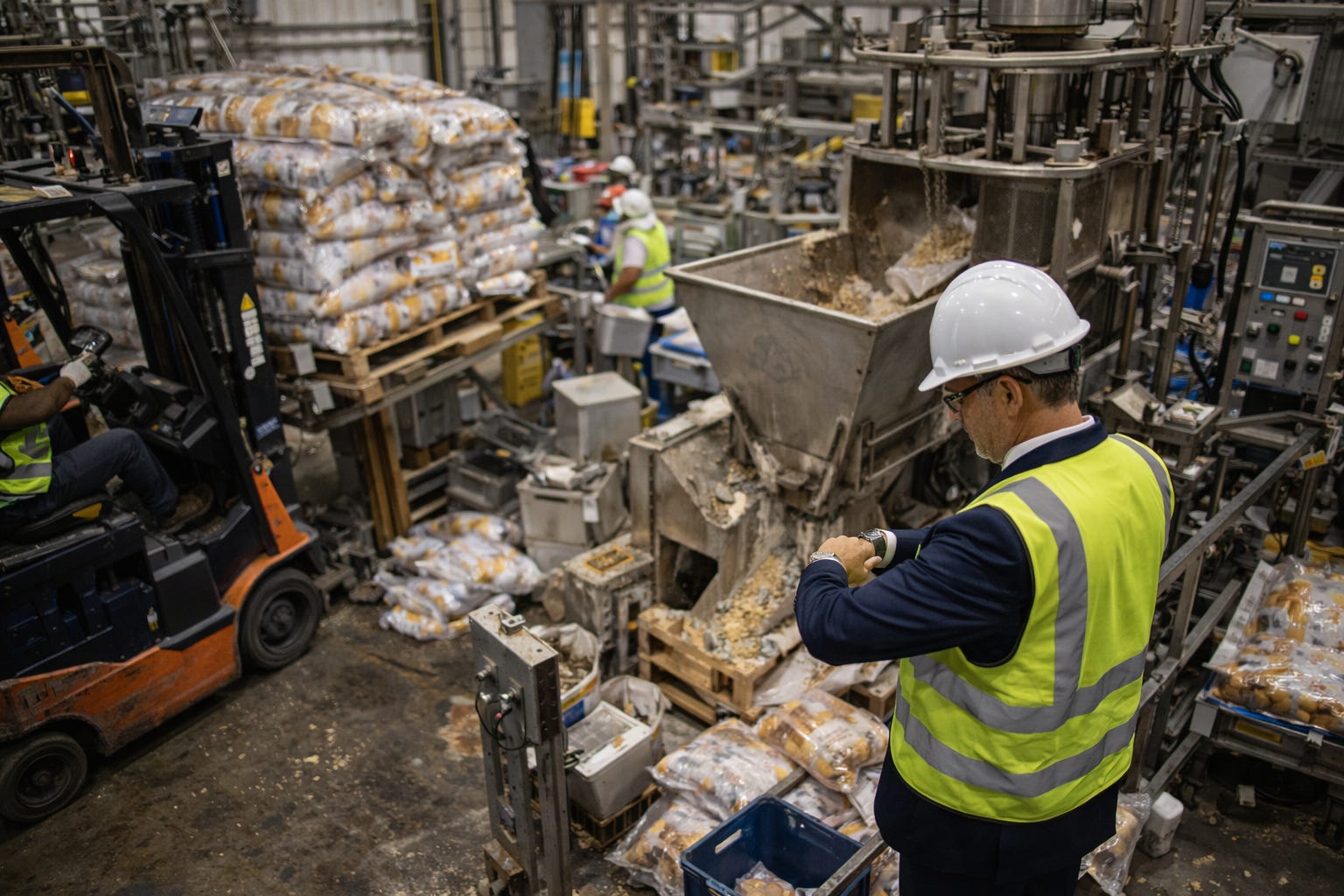
When you schedule the next one, tell everyone invited to show up in person and bring PPE. Create the slides as usual, if you must, but don’t waste time going through them. Instead, take them on a field trip to relearn the value stream. Literally, skip the meeting and take the entire team to the floor, the place where the actual work is done.
Divide into teams and have each group follow a different workstream from end to end. Start at the beginning and stand there long enough to witness and understand the flow. Pay attention to where things slow down or seem unclear.
Follow the value stream step-by-step, down the aisle and around the corners. Notice each handoff along the way. Stay where it stays until it is touched, checked, moved, or delayed. Stand in place and dwell with it. Feel the delay.
Most of what is wrong in a system doesn’t show up when things are moving cleanly. It shows up in the form waiting, confusion from lack of clear standards, and tiny adjustments people must make to keep things going. You will feel it when you are standing there with nothing happening and no clear reason why.
When your target reaches its final destination, start again and follow it a second time. The first pass shows you motion, the second shows you pattern. Keep going until you understand it and can explain it to others.
Talk to the workers. Pay attention to the number of steps, the extra touches, the distance traveled, and where things slow down or don’t line up as you thought they did.
At the end, bring everyone back together and ask them to explain the steps in the process they observed. Have them explain every step in the sequence. Listen for explanations that are vague or inconsistent. That is usually where the system is not understood as well as people think.
Ask what surprised them and what they would change. The result might surprise even the most jaded operational executive.
The COVID era and its work-from-home shift didn’t create this lack of clarity, but it certainly accelerated it in a way that most organizations haven’t fully accounted for. Work environments, previously siloed, became fragmented pockets of knowledge about segments of the system. People became very good at managing their part, but fewer and fewer can describe how the system actually fits together from end to end.
The dashboard, already a star for simplification through aggregation, became the field of play. Leaders manage KPIs through actions, instead of through the work itself, not because they’re wrong, but because that is what the system now asks of them.
But the work never moved.
It is still on the floor, and it still depends on sequence, timing, space, and touch to function. When it’s leaders are not close enough, they risk managing outcomes without fully understanding how those outcomes are created. Over time, that gap shows up not as failure, but as friction or waste. The system still runs, but it runs heavier and slower than it could if tuned properly.
So take one meeting and give it back to the work.
Don’t make it a tour or view this as a grand symbolic gesture. Be deliberate about it. Stay in the system long enough to understand how it actually functions.
Because if no one in the room can walk it end to end and explain how it works, then no one owns the system. And systems without ownership don’t fail all at once. They drift.
Drift is your system under decay. And that monthly meeting is where it’s aggregated and explained away. Better you see it clearly.
Author’s Note
I may seem anti-dashboard. I’m a quantitative analyst at heart and appreciate the rich analysis one gets for what is really happening in well-aggregated data. But dashboards are not the system, just snapshots of a system that lives somewhere else.
My call is not to abandon structure, but rebalance it by getting close enough to the work that your understanding is grounded again, and by making sure that someone can still walk it, explain it, and improve it without relying on abstraction.
Uncontrolled systems lead to bad outcomes. Systems in control make sense and this is a call to return systems to control state. To read more of my essays, subscribe to my Substack, Chasing Omniscience.
"...return respect to the place where the work is done….skip the meeting and take the entire team to the floor, the place where the actual work is done. The first pass shows you motion, the second shows you pattern. Keep going until you understand it and can explain it to others…. understand how it actually functions.” Todd Andrew Owings